We Three Kings - America’s First Great Christmas Carol
The heart of the hymn is the theological symbolism of the gifts.

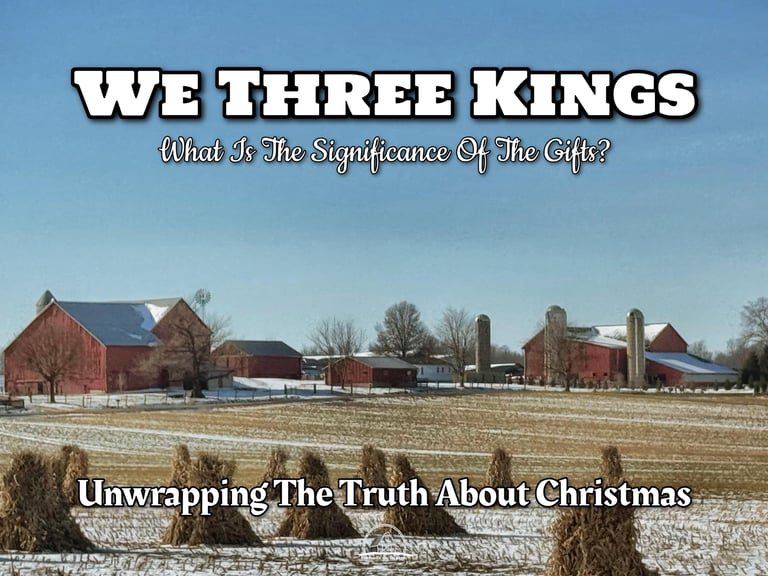
We Three Kings - America’s First Great Christmas Carol
If you were asked to write a song for a Christmas pageant, what theme would you choose? John Henry Hopkins Jr. had that opportunity, and chose to write about those who brought gifts to Jesus in Bethlehem.
“We Three Kings” was written by Hopkins in 1857 while a music teacher in New York City. It was a groundbreaking Christmas song. At a time when England was the epicenter of the hymn-writing world, “We Three Kings” became the first America Christmas carol to achieve global popularity.
The song was lovingly embraced and included in the major hymn publications of the day. It was America’s favorite Christmas carol for 100 years. All this in spite of the fact that the three is not biblical, the Bible never calls them kings, and they weren’t from the Orient. (They were “from the East,” not from the Orient. Those are not the same things.)
And yet, “We Three Kings” continues to be a core part of the Christmas caroling tradition. Why has this song about mysterious visitors to the baby Jesus remained so popular for so long?
Let’s be honest—we all love singing it because it’s a really great song, and it deals with a wonderful subject: the world coming to kneel before the baby Jesus.
The heart of the hymn is the theological symbolism of the gifts.
Gold is for a king. It signals a world acknowledging the arrival of the expected King of Kings.
Frankincense was used in temple worship. A Priest was being born in Bethlehem. This Child would be more than a King—He would also be a Priest, reconciling mankind to God.
But the Priest-King would also be the Prophet. Myrrh, a burial spice, points us to His suffering and death. A King is born to rule; a Priest, to lead people back to God. But the Prophet? The Prophet is born to die. A prophet is God’s voice to the people, and they are rarely received with love or joy. They take the world’s hatred and derision toward God.
“We Three Kings” remind us that this baby came to take His place on the throne, to intercede for mankind, and to give His life for the sins of the world.
Tomorrow: Who were these visitors, and where did they come from?